Most vent hood repair decisions start in the wrong place. The assumption is usually simple. If the fan turns on, the motor works, and air can be felt moving, the vent hood must be functioning properly. In many service calls, that assumption turns out to be inaccurate. A vent hood exists for one purpose. It must control what happens above the cooking surface before heat, grease particles, moisture, and combustion byproducts spread into the kitchen environment. The challenge is that airflow alone does not determine whether that happens.
One of the most misunderstood parts of kitchen ventilation is the belief that moving air and capturing contaminants are the same thing.
They are not. A vent hood does not clean the entire room. It attempts to intercept a rising thermal column generated by cooking activity. Every burner, pan, and cooking method creates a different thermal pattern. The hood’s job is to establish control over that pattern before it expands beyond the capture area.
This is why some homeowners notice grease accumulation on cabinets, odor migration into adjacent rooms, or excessive moisture on nearby surfaces, even when the vent hood appears to be operating normally.
The system may still move air. It may no longer be controlling the thermal column effectively. From a repair perspective, this distinction changes the entire diagnostic process.
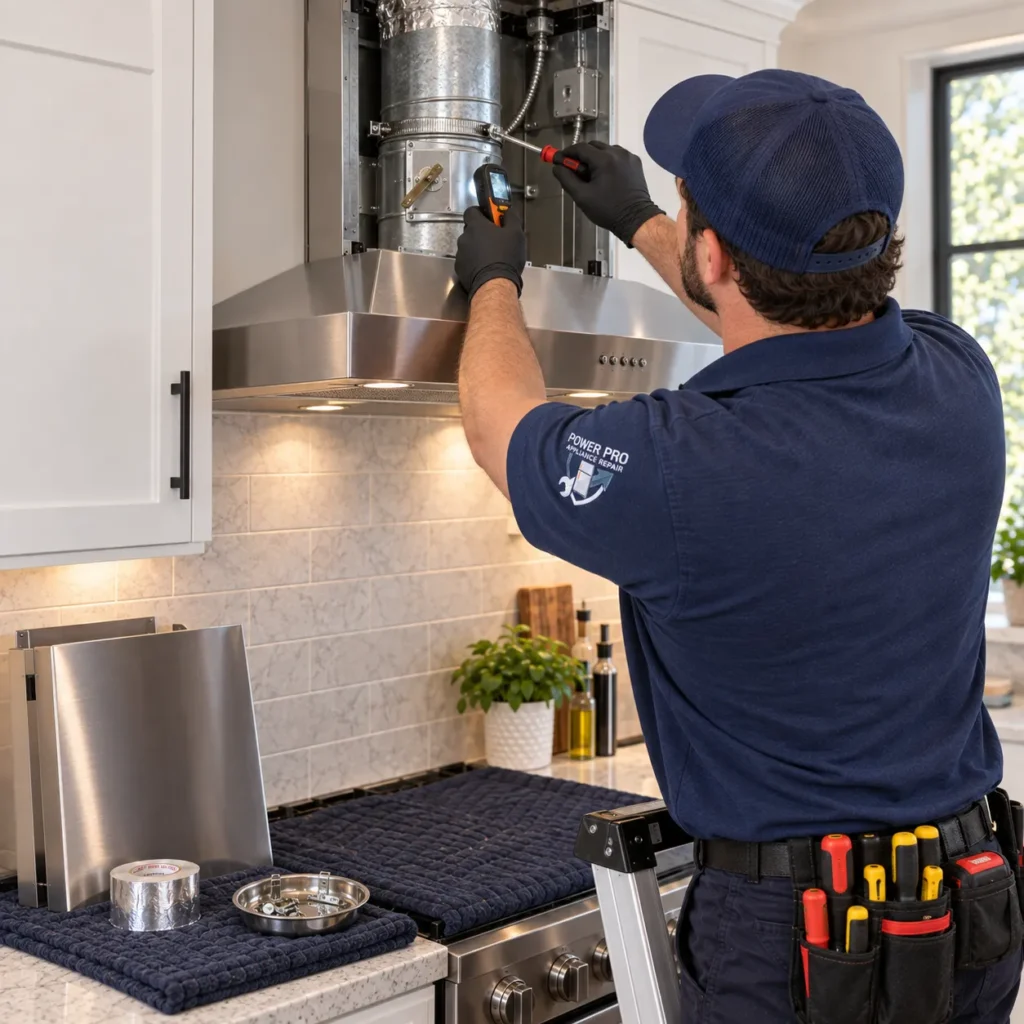
At Power Pro Appliance Repair, vent hood evaluation is structured around three separate questions.
The first question is whether contaminants are entering the capture zone efficiently.
The second question is whether air movement remains stable after contaminants enter the system. The third question is whether extracted air completes its path without restriction or disruption.
Separating ventilation into these stages prevents every complaint from being treated as a fan problem.
The objective is to identify the exact point where environmental control is lost and restore stable capture behavior throughout the cooking process.
Every repair backed by our parts & labor guarantee.
Fast scheduling, often fixed the very same day.
Factory-trained pros for all major brands.
Honest quotes with no hidden fees, ever.
One of the more interesting patterns observed during service work is that some vent hoods develop performance complaints despite having no major failed components. The motor operates correctly.
The controls respond normally. The lighting system functions as expected.
Yet cooking odors remain longer than before, and grease begins appearing in areas that previously stayed clean. This often points toward what can be described as capture degradation.
Capture degradation occurs when the hood gradually loses its ability to establish control over rising contaminants at the source.
The cause can originate from airflow restrictions, environmental changes, pressure imbalances, discharge limitations, or long-term accumulation patterns that alter how air behaves around the intake area.
The result is a system that appears functional but no longer performs at its original level.
Most appliance websites discuss vent hoods as if every cooking session creates identical conditions. Actual kitchens behave differently. A stock pot generates a concentrated vertical heat column.
A large skillet spreads heat across a wider surface area. High-temperature searing creates aggressive thermal movement that behaves differently from slow simmering.
These variations influence how contaminants rise toward the hood. This means a simple airflow measurement cannot always judge ventilation performance.
A system may perform adequately under one cooking condition and struggle under another despite no mechanical changes occurring inside the appliance. Understanding this relationship allows ventilation problems to be evaluated through cooking behavior rather than through equipment specifications alone.
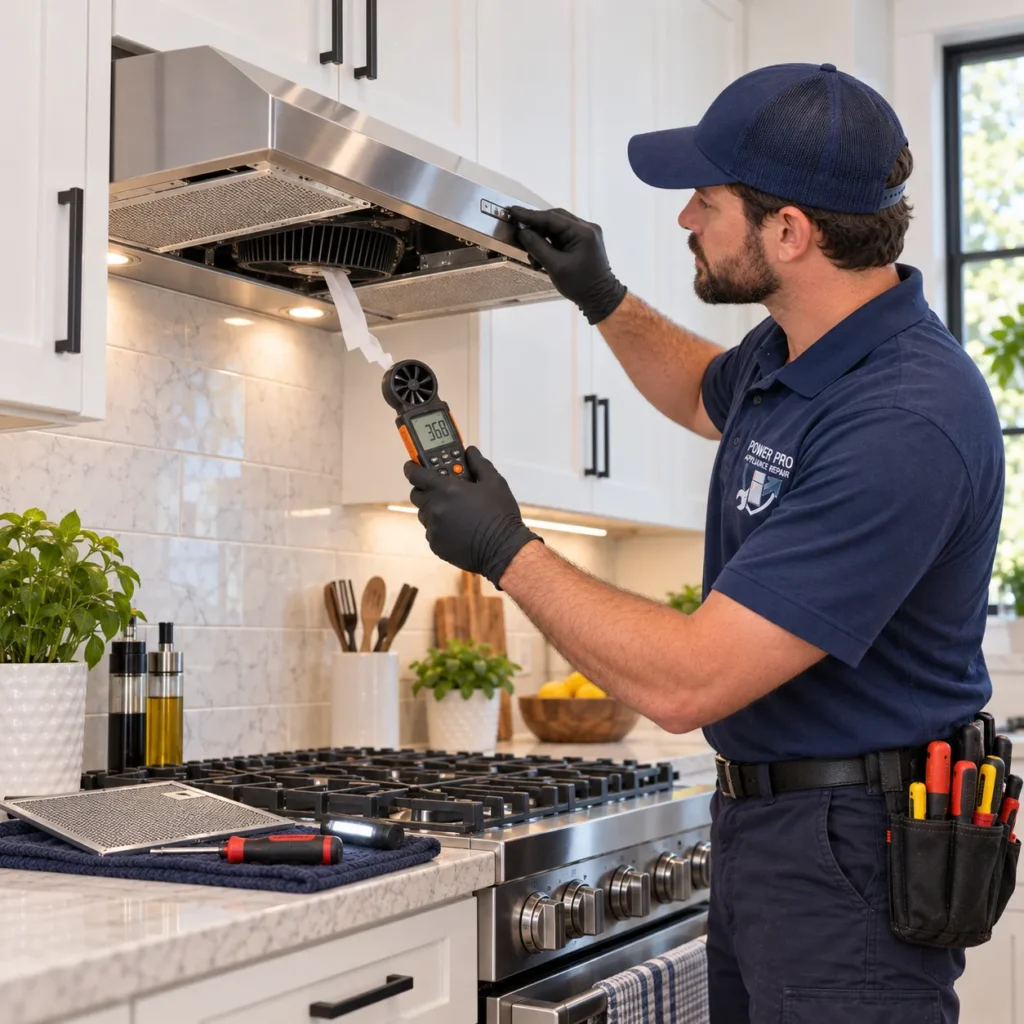
A vent hood does not operate in isolation. Every kitchen contains multiple forces competing for control of air movement. Central HVAC systems create pressure changes throughout the home. Ceiling fans alter directional airflow. Open windows introduce external air currents. Nearby doors create movement patterns that shift as people move through the space.
In some situations, these competing forces become strong enough to interfere with contaminant capture above the cooking surface. This creates a scenario where the vent hood itself is blamed for poor performance, even though the larger issue involves airflow competition occurring within the kitchen environment. Part of proper diagnosis involves identifying whether the ventilation system is losing control because of an internal appliance issue or because another airflow source is disrupting the capture process.
Grease patterns often provide information that operating sounds cannot.Most homeowners focus on whether the fan sounds different from before. A more useful indicator is where grease begins accumulating throughout the kitchen. Grease follows airflow behavior. When extraction control weakens, grease particles settle in predictable locations. The distribution pattern often reveals whether contaminants are escaping before reaching the intake area, encountering resistance during transport, or failing to exit the ventilation path efficiently. For this reason, grease accumulation is not viewed merely as a cleaning issue. It can serve as a diagnostic indicator of changing ventilation behavior. Understanding where residue appears often provides insight into where airflow control begins to break down.
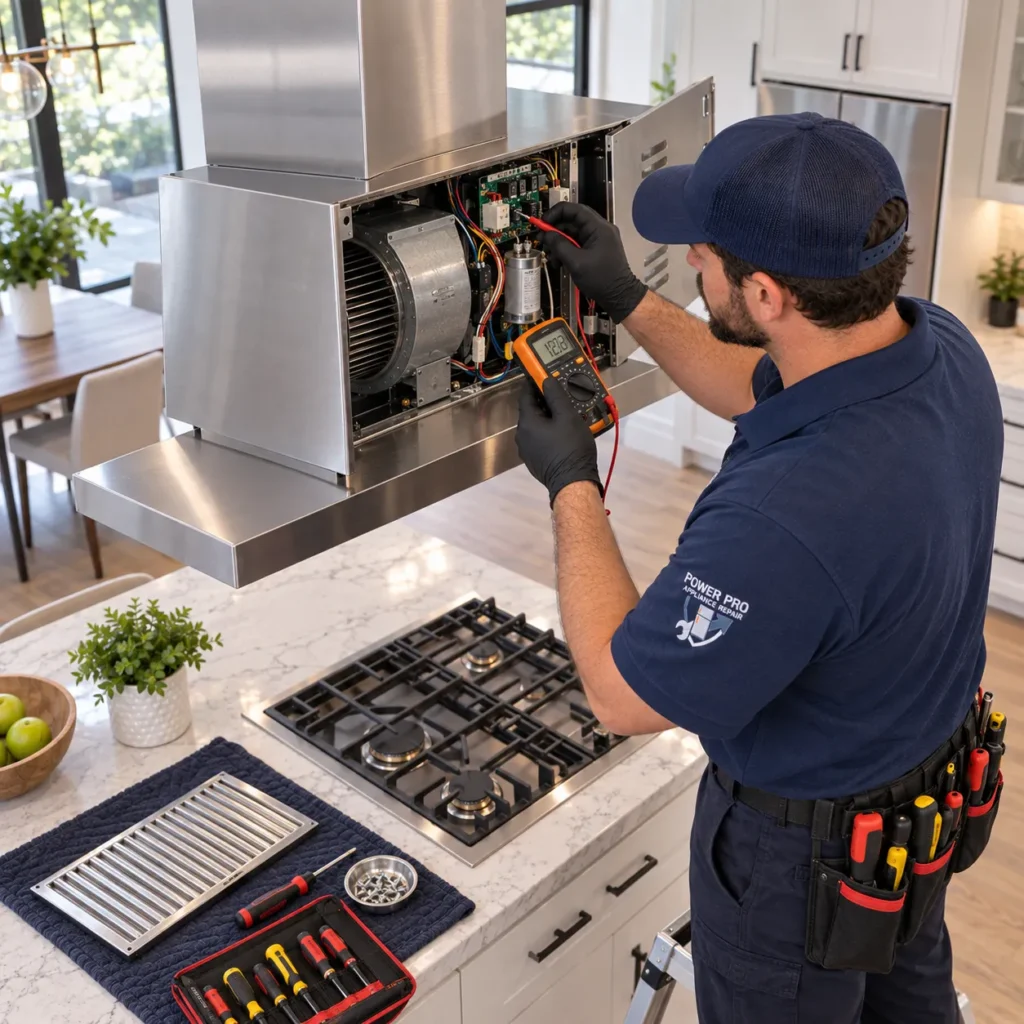
Noise indicates operation. It does not confirm capture efficiency. A system can move air and still fail to intercept contaminants before they spread into the room.
This often indicates that grease particles are escaping the capture zone before entering the ventilation path. The issue may involve airflow behavior rather than complete mechanical failure.
Yes. Many ventilation systems experience progressive performance decline through airflow restriction, environmental changes, or capture degradation long before complete failure occurs.
Different cooking methods create different thermal columns. Some produce wider contaminant spread patterns that place greater demand on the capture area.
In many kitchens, the earliest signs are increased odor persistence, changing grease accumulation patterns, and longer moisture retention after cooking, rather than complete operational failure.