Most wine cooler issues are not cooling failures. They are storage behavior failures that appear inside a functioning cooling system. A wine cooler can run normally, maintain temperature readings, and still fail at its actual job: preserving stable aging conditions for stored wine. What changes first is not temperature. What changes first is how storage behaves inside the unit. At Power Pro Appliance Repair, wine cooler evaluation is based on a simple principle: if storage behavior is changing, the system is already in a failure state even if cooling still works. In Algonquin, where homes are spread across the surrounding communities, that kind of subtle storage change can be easy to miss until bottles begin aging differently over time.
Wine cooler performance cannot be understood through a single temperature reading. Instead, performance is mapped through three storage behaviors that appear in real usage:
Different bottles inside the same unit begin aging differently. This is not random. It indicates internal condition separation is forming inside the cabinet. Top shelf, bottom shelf, and door-adjacent zones start producing different storage outcomes. The system is no longer acting as a single environment. It is behaving as multiple micro-environments.
Every time the door opens, internal conditions are disturbed. In a stable system, recovery returns all zones back to the same condition. In an unstable system, recovery is uneven. Some zones stabilize quickly. Some zones lag behind. Some never fully return to baseline conditions. This is one of the earliest signs of system drift.
Wine coolers do not reset after every cycle. They carry thermal memory. When this memory becomes unstable, the system begins behaving differently after repeated compressor cycles. Instead of returning to the same baseline repeatedly, each cycle slightly shifts internal conditions. This is where long-term storage quality starts changing.
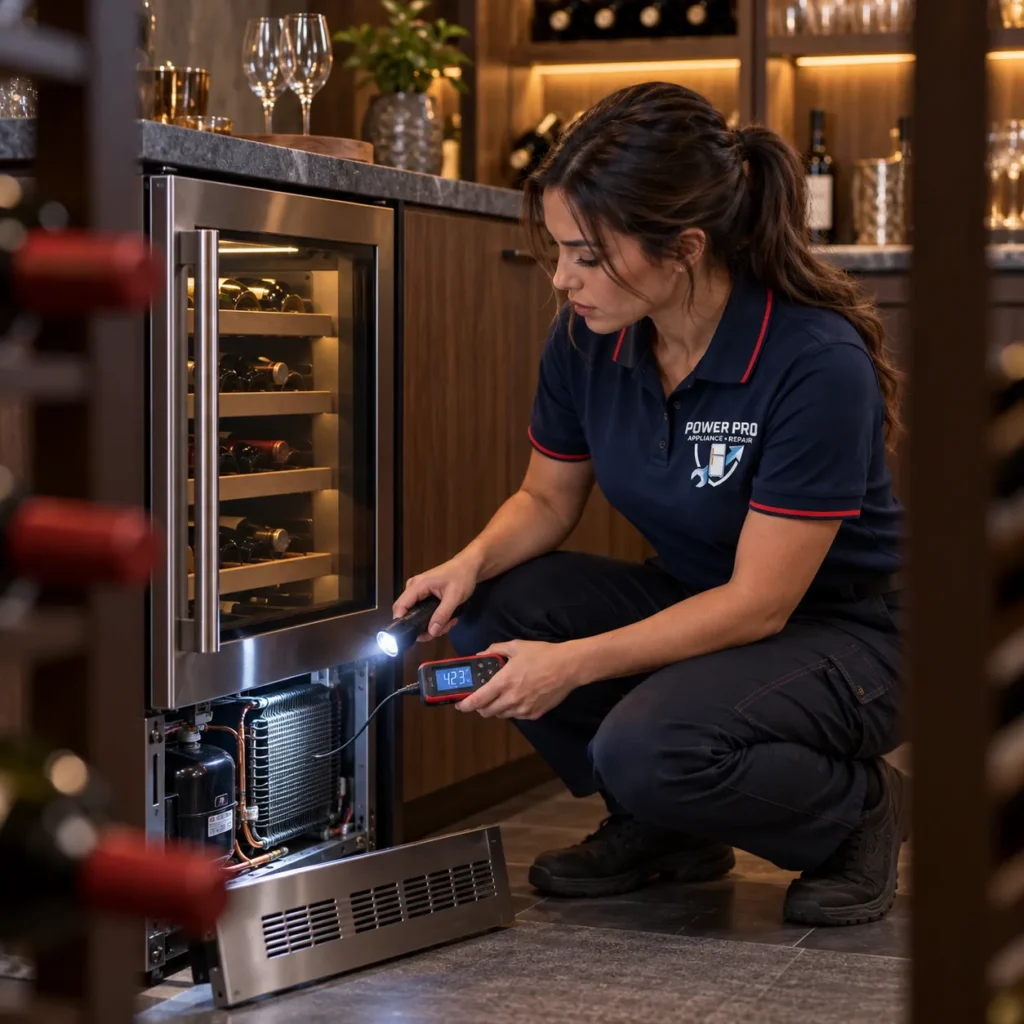
Most diagnostics fail because they stop at temperature confirmation. But wine storage does not depend on temperature alone. It depends on temperature consistency over time and across space.
A unit can show the correct temperature, run the compressor normally, and maintain airflow, and still fail at storage preservation. Because stability is not about whether cooling exists. It is about whether cooling behaves consistently.
Every repair backed by our parts & labor guarantee.
Fast scheduling, often fixed the very same day.
Factory-trained pros for all major brands.
Honest quotes with no hidden fees, ever.
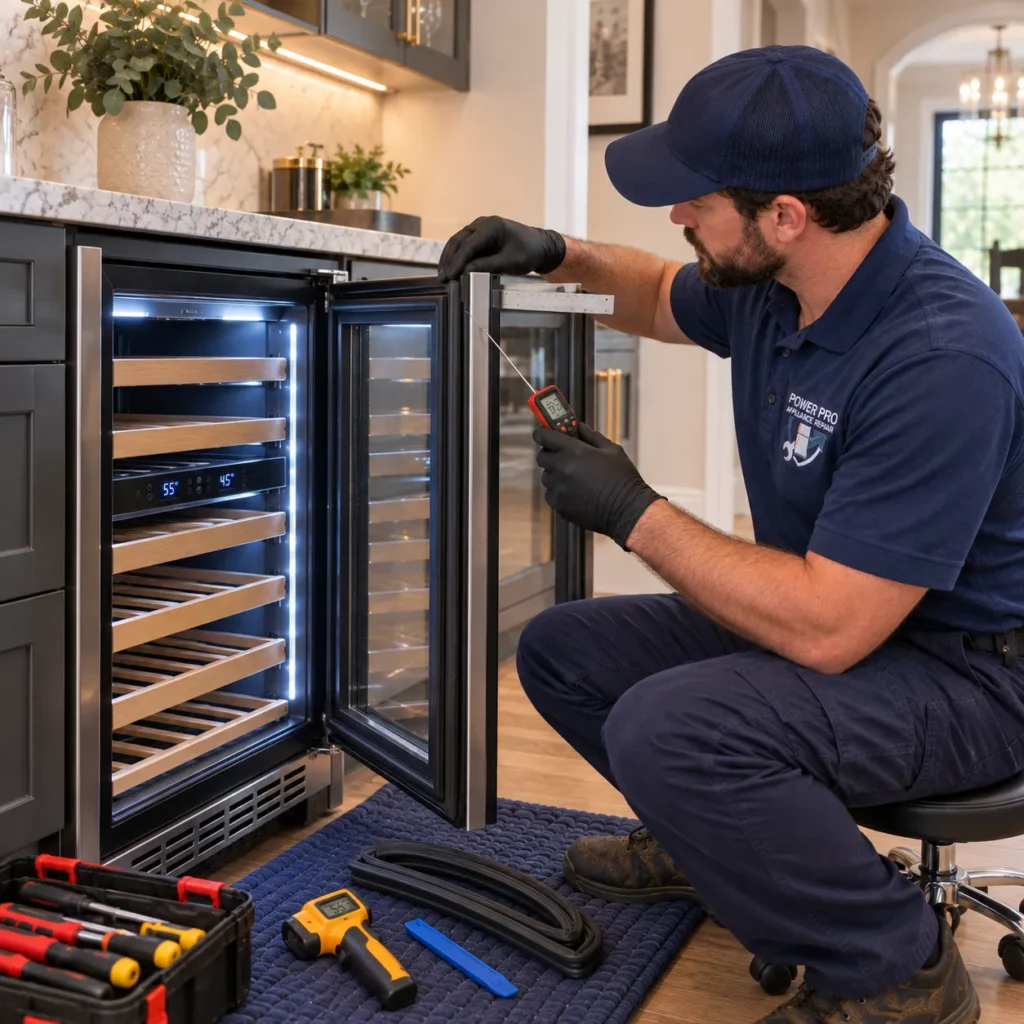
One of the most overlooked failure patterns is internal condition separation. This happens when a wine cooler stops behaving as one unified chamber. Instead, it begins forming layers of slightly different conditions. This is not immediately visible.
It appears as:
Technically, the machine is working. Functionally, the environment is breaking into zones. Once this separation begins, simple repairs that focus only on cooling output do not restore full performance.
Wine coolers are not static systems. They respond to load changes. Adding bottles changes airflow behavior. Removing bottles changes thermal balance. Even rearranging shelf positions can shift internal dynamics.
When a system becomes sensitive to load changes, it indicates reduced stability in environmental control. Stable systems absorb these changes without altering storage behavior. Unstable systems react to them visibly.
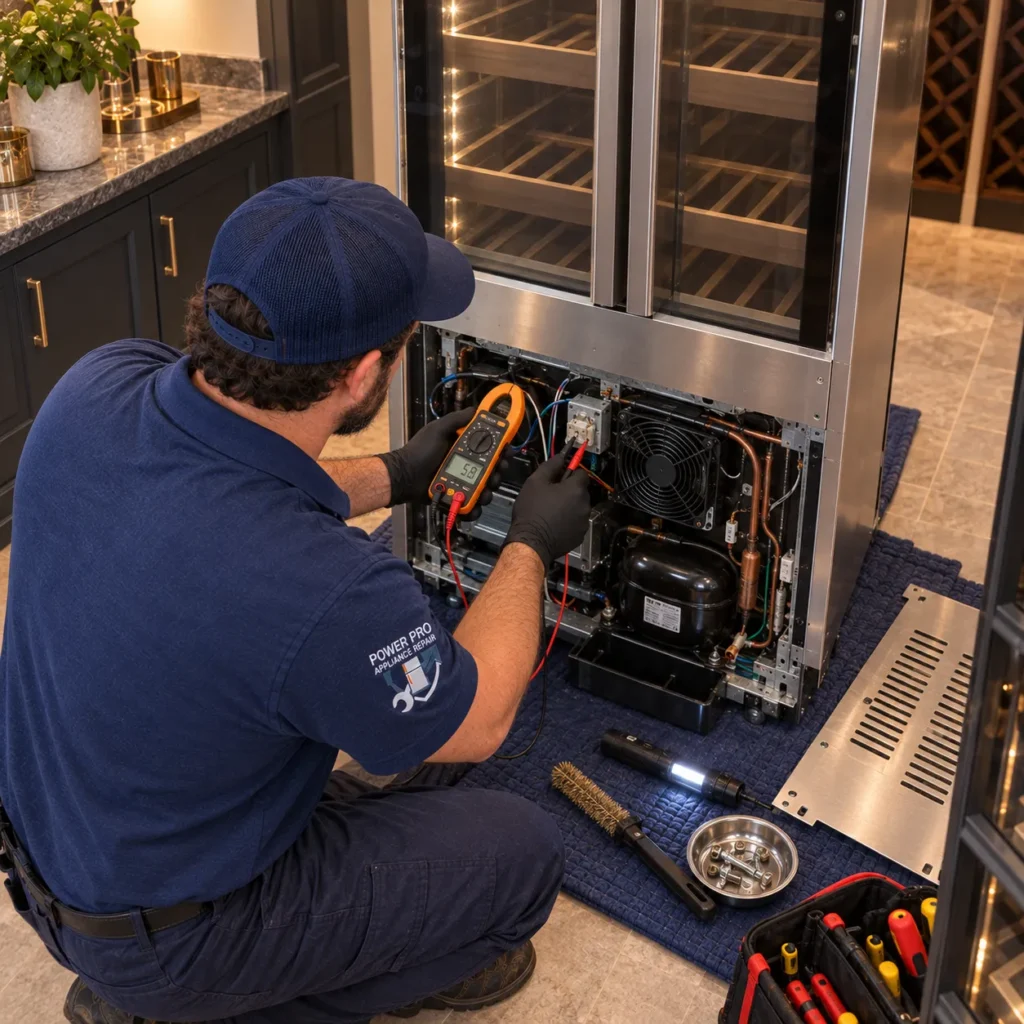
Wine cooler issues follow a progression that does not match standard appliance failure logic.
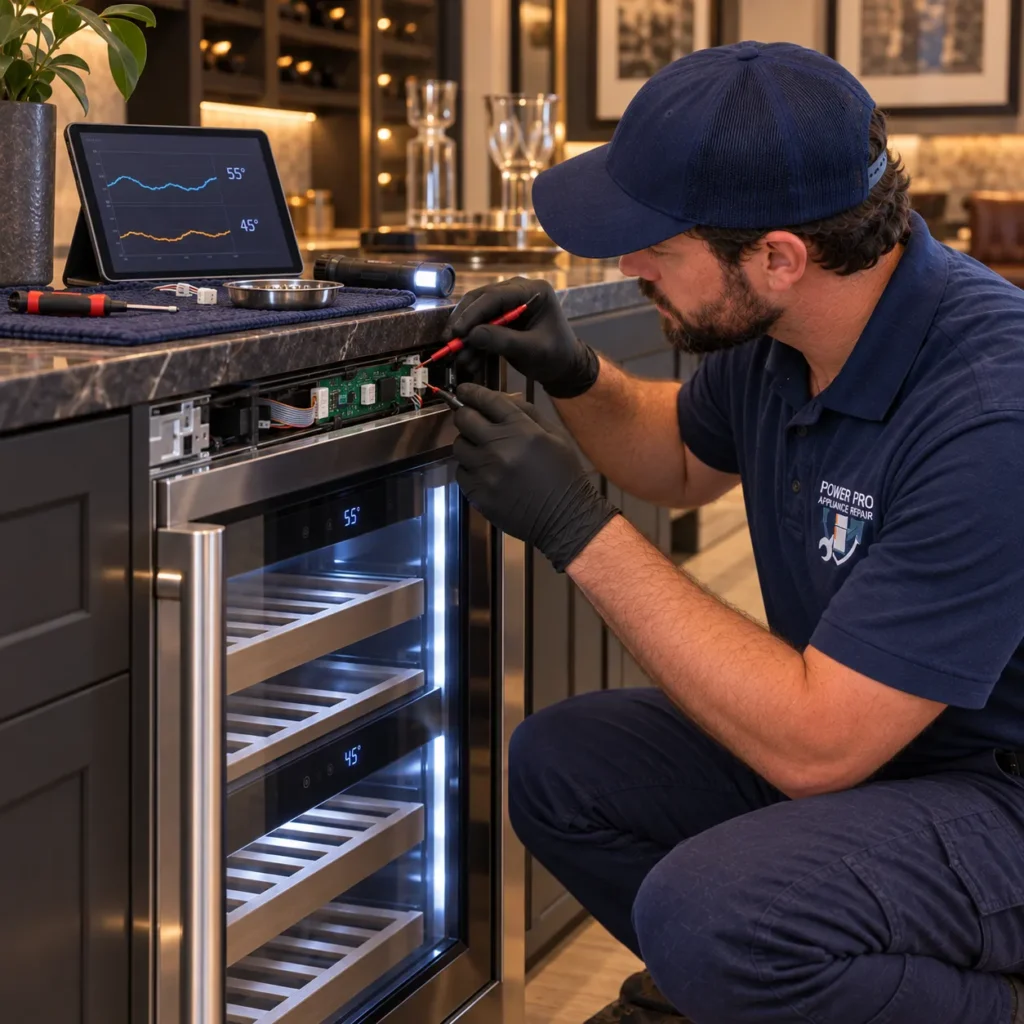
Small differences appear between storage zones. Not noticeable in daily use.
After door opening or cycling, the system takes longer to stabilize evenly.
Bottle positions begin producing different storage outcomes.
Wine aging behavior becomes inconsistent across the same unit.
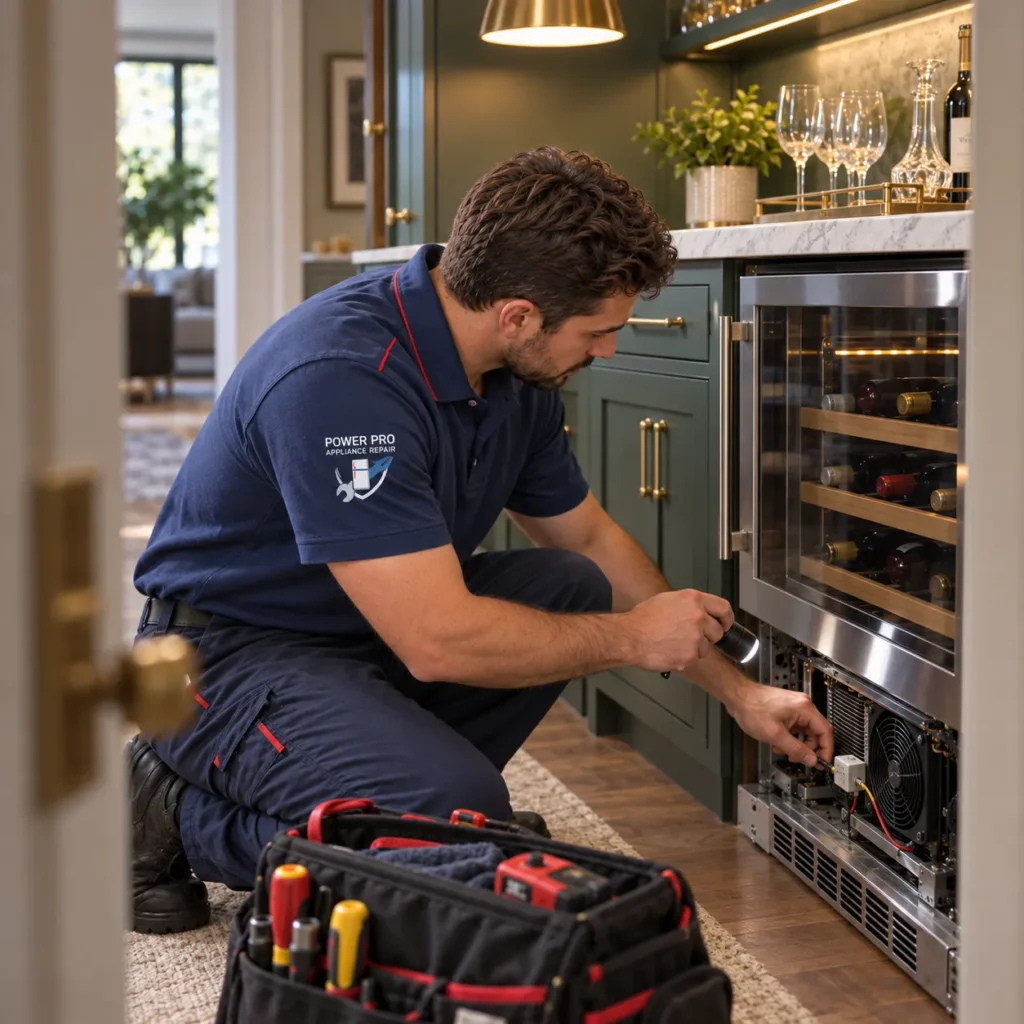
At Power Pro Appliance Repair, diagnosis is not based on whether the unit cools. Diagnosis is based on whether the storage environment behaves consistently. We evaluate:
The goal is not to restore cooling. The goal is restoring single-environment stability inside the cabinet.
That approach matters in Algonquin and nearby communities, where wine coolers are often used in homes that expect stable storage performance, not just a working temperature display.
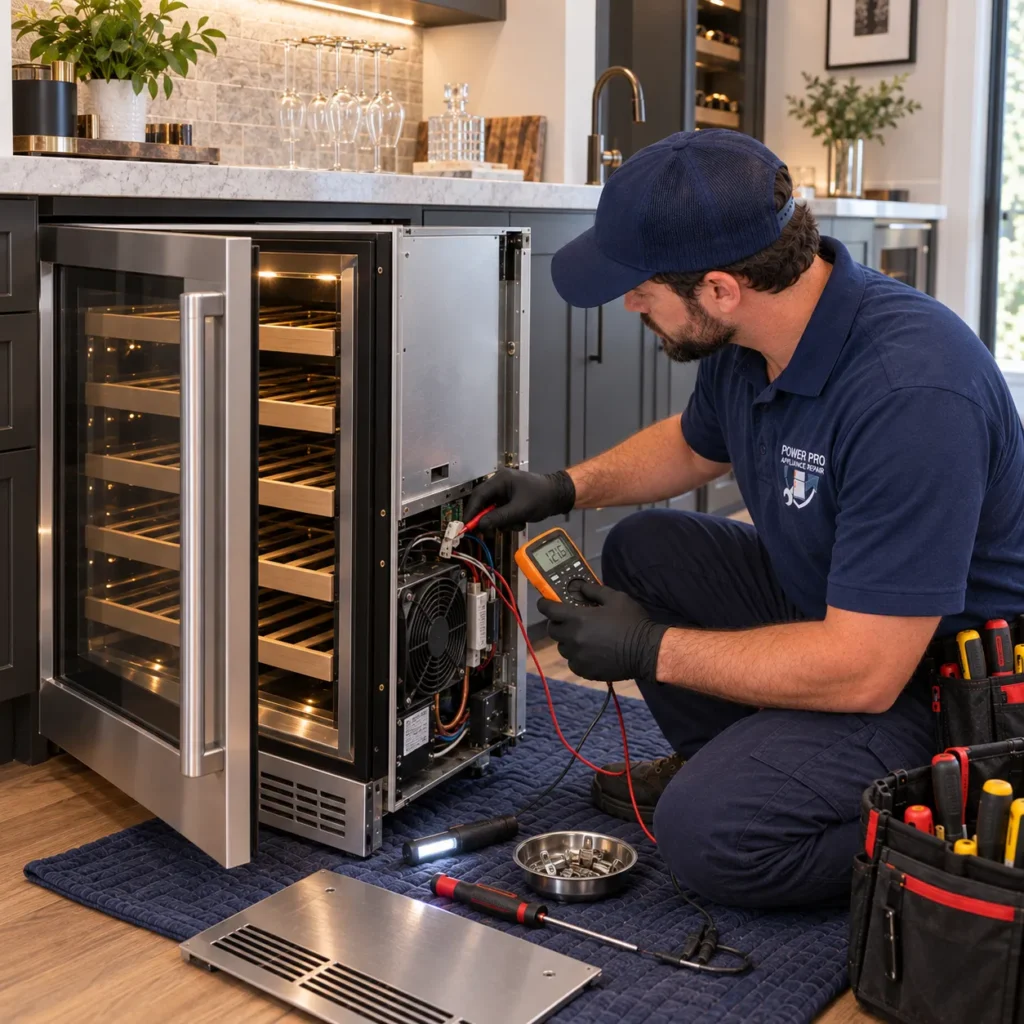
Because temperature reading does not reflect zone behavior or long-term stability inside the cabinet.
This usually indicates internal condition separation where the unit is no longer maintaining a single uniform storage environment.
Yes. Cooling can remain functional while storage stability breaks down internally.
Because unstable systems fail to recover evenly across all internal zones after disturbance.
The first sign is not temperature change. It is variation in storage behavior between bottles inside the same unit.