Oven problems rarely present as a full breakdown. What usually changes first is cooking behavior that no longer matches expectation even though the appliance appears fully functional. A tray may cook unevenly across the same cycle, baking time may extend without control changes, or internal results may differ between identical settings on different days. These changes point toward instability in heat formation and heat retention patterns. Oven repair is approached here as a behavior mapping process where temperature movement inside the chamber is studied over time, rather than only checking whether heating elements turn on or off. The objective is not restoring basic heat output. The objective is to restore predictable thermal behavior across repeated cooking cycles.
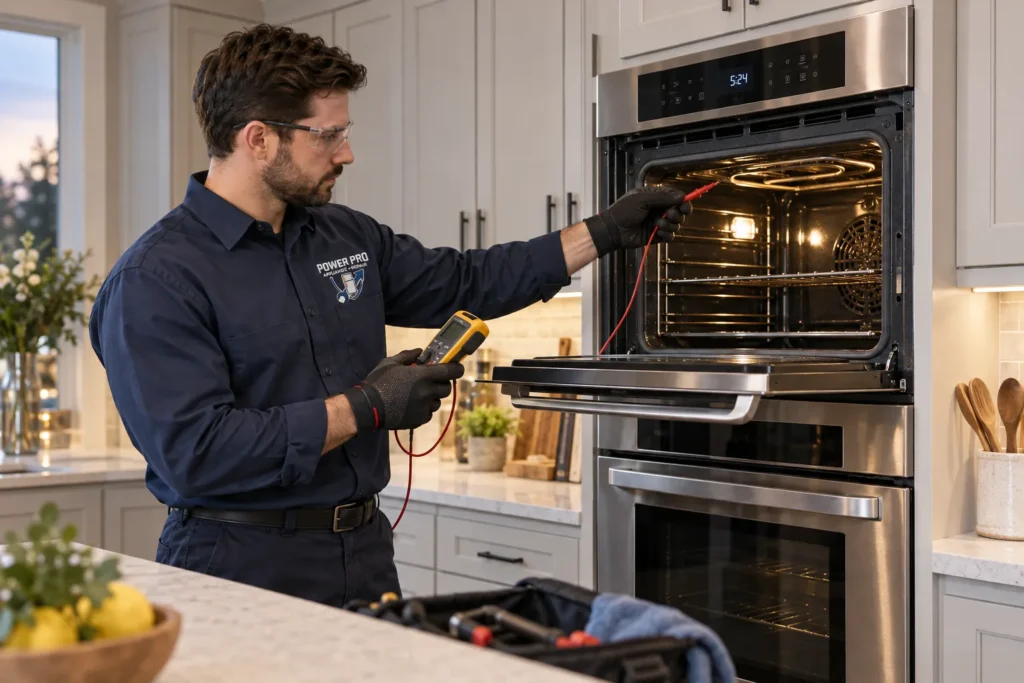
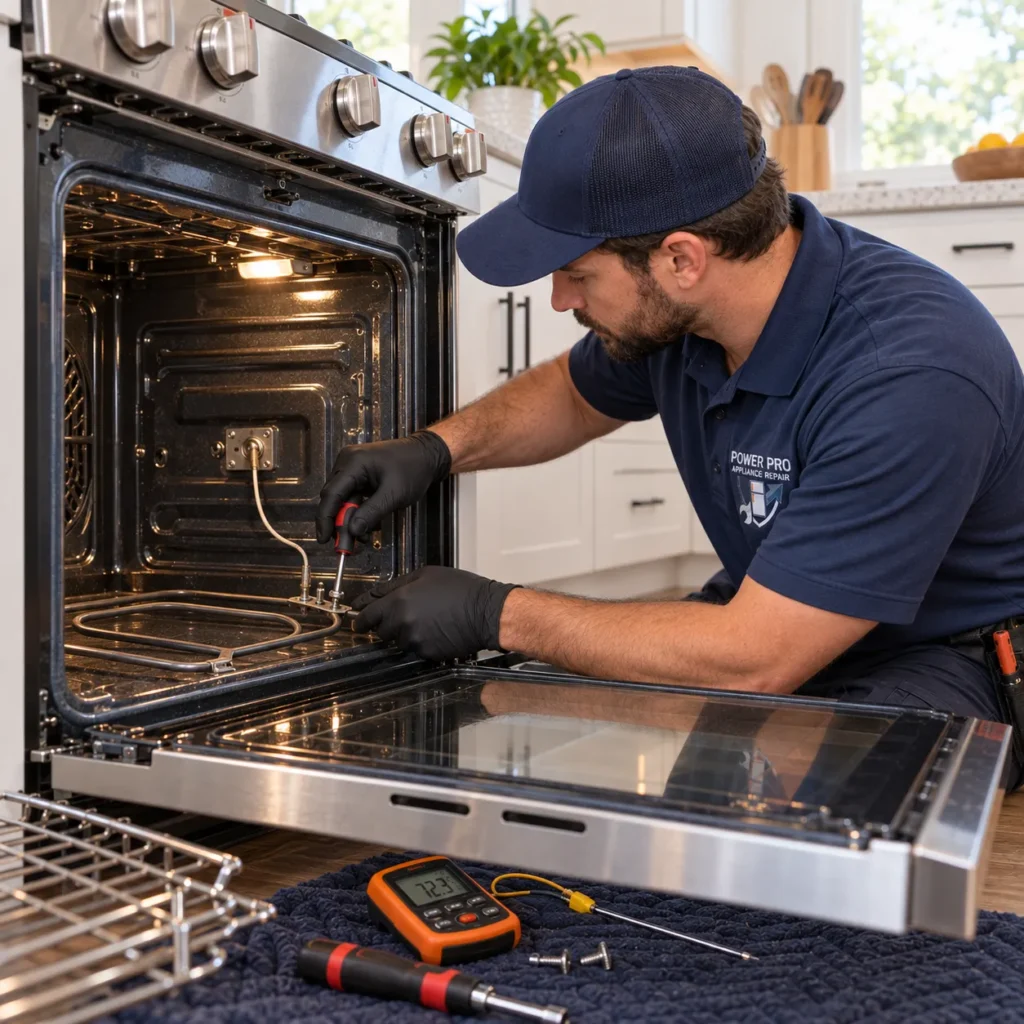
Oven systems operate through a controlled balance of heat generation, temperature sensing, and chamber retention. When any part of this balance starts shifting, the oven may still complete cycles but lose consistency in cooking results. At Power Pro Appliance Repair Oven repair is handled through a layered evaluation instead of a single-point diagnosis. Each unit is reviewed based on how heat develops from a cold start, how it stabilizes during mid-cycle operation, and how it behaves during extended cooking periods. The evaluation also considers whether heat loss is uniform or directional. Some ovens lose temperature gradually across the entire chamber, while others show localized instability where specific zones behave differently from the rest of the cavity. This separation is important because both patterns lead to different repair decisions even when the user experience appears similar.
Every repair backed by our parts & labor guarantee.
Fast scheduling, often fixed the very same day.
Factory-trained pros for all major brands.
Honest quotes with no hidden fees, ever.
Oven diagnosis begins with tracking how the temperature behaves rather than what the temperature is set to. A stable oven shows a controlled rise in heat followed by a steady plateau where the temperature holds within a predictable range.
Unstable ovens show irregular cycling where temperature overshoots, drops, or fluctuates during the same cooking phase. Another layer of evaluation is thermal recovery speed. After the door opens or the load is introduced, the oven must return to a stable temperature within a consistent time range.
When recovery becomes slow or inconsistent, it indicates reduced efficiency in heat generation or sensing feedback delay.
Heat distribution is also reviewed across multiple tray positions. If upper and lower sections show different cooking outcomes under identical settings, the issue is treated as a distribution imbalance rather than a general heating failure.
Oven faults are not treated as isolated component problems at the first stage. The first step is identifying whether the system is failing in heat generation, heat control, or heat retention.
If heat generation is unstable, the oven struggles to reach or maintain temperature targets. If control feedback is unstable, the oven reaches temperature but cannot hold it consistently. If retention is weak, heat escapes too quickly even when generation is stable. Each of these patterns leads to a different repair direction.
This separation prevents unnecessary part replacement and focuses repair effort on the actual point where thermal behavior breaks down. Once the unstable layer is identified, correction is applied, and the system is retested across multiple full cycles to confirm consistency under repeated use conditions.
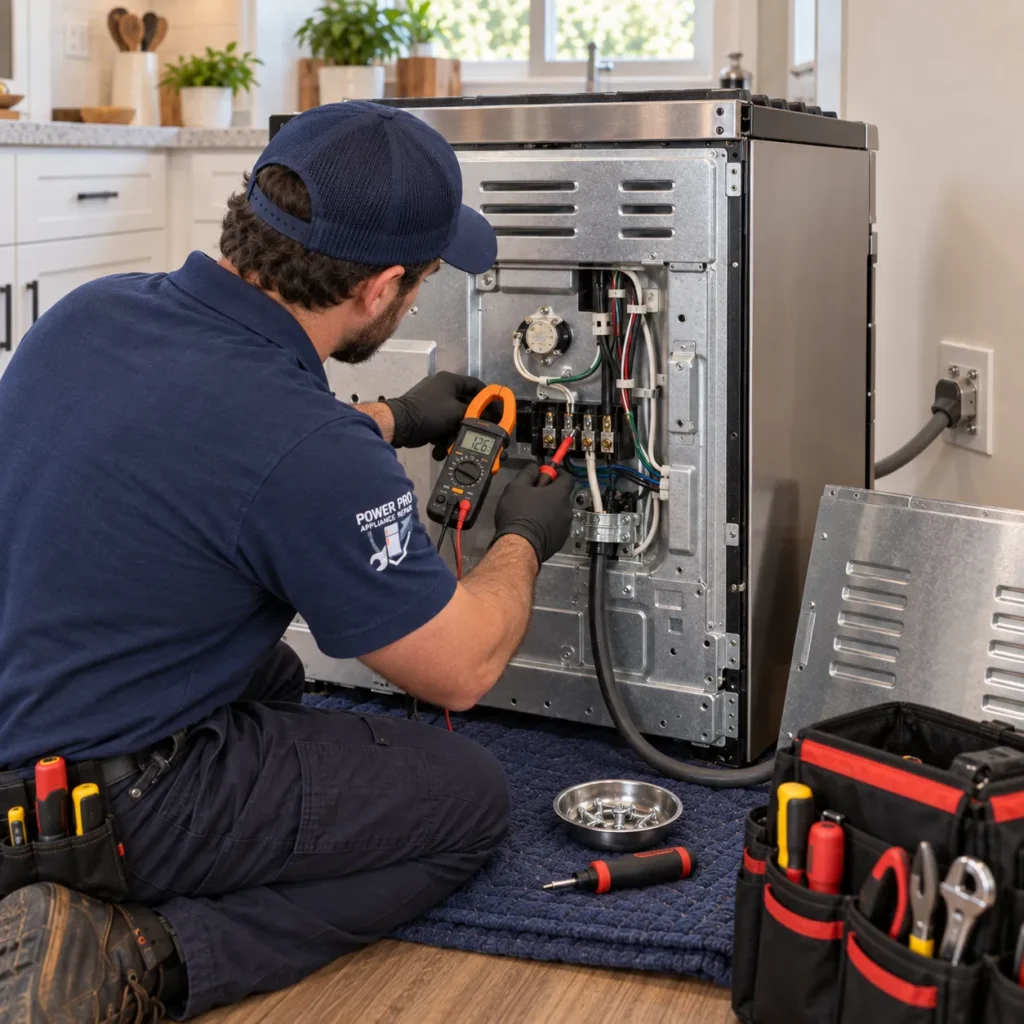
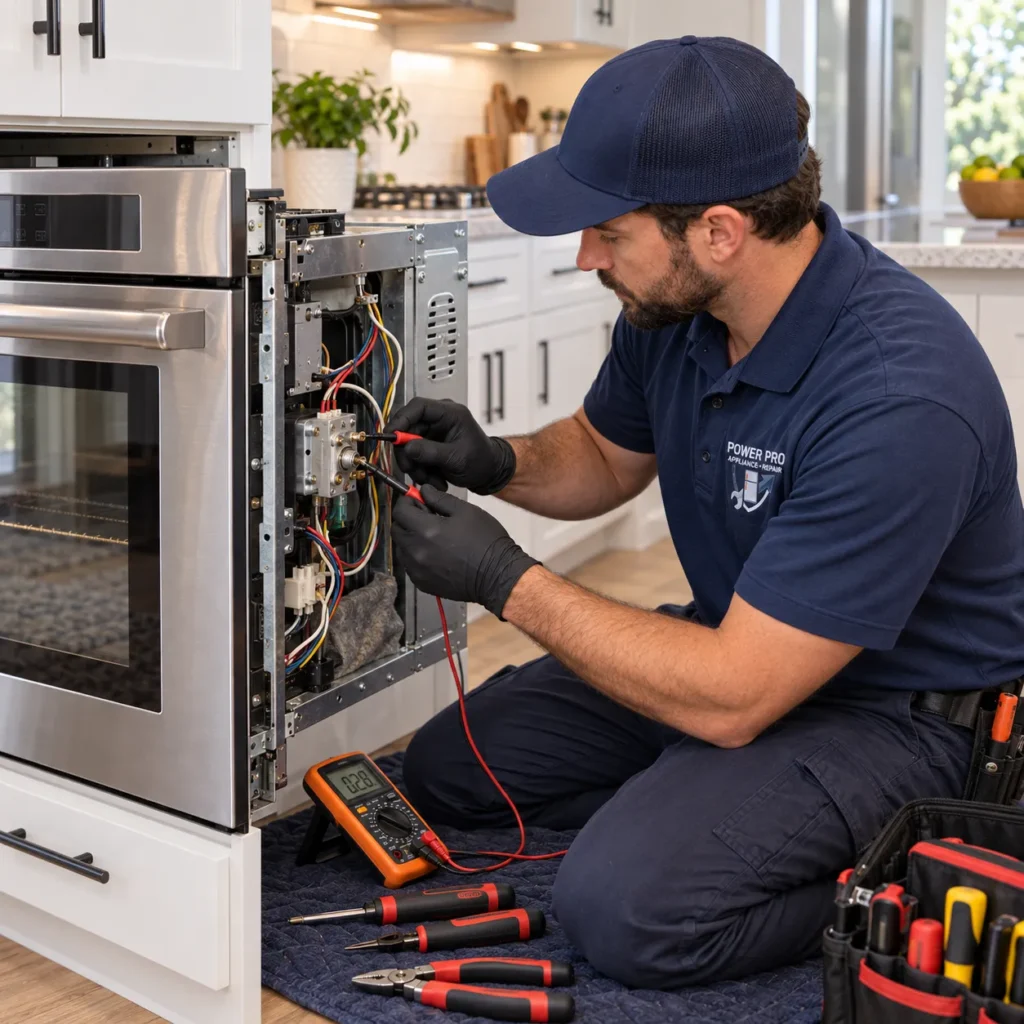
Uneven cooking usually comes from a heat distribution imbalance inside the chamber. The oven may be reaching temperature but not maintaining an equal thermal spread across all zones.
This usually happens when temperature control feedback does not align with actual heat conditions, causing repeated overcorrection during operation.
In many cases, the oven is still heating but losing efficiency in heat retention or recovery, which extends total cooking duration without user input changes.
Yes, in many cases. Issues often come from calibration drift, partial wear, or heat regulation imbalance rather than full system failure.
The earliest sign is usually inconsistency between the expected cooking outcome and the actual result under identical settings across repeated use.