Garbage disposal issues usually appear suddenly, but field patterns show a different reality, which I learned from my personal experience. Most failures begin as mechanical resistance, followed by partial motor stress, and then complete blockage or shutdown. Over 11 years of appliance service work and more than 2,500 completed repair cases, I have seen this pattern repeatedly in homes throughout Algonquin, IL. A single jam event rarely causes disposal failures. They develop through progressive load stress inside the grinding chamber and motor assembly.
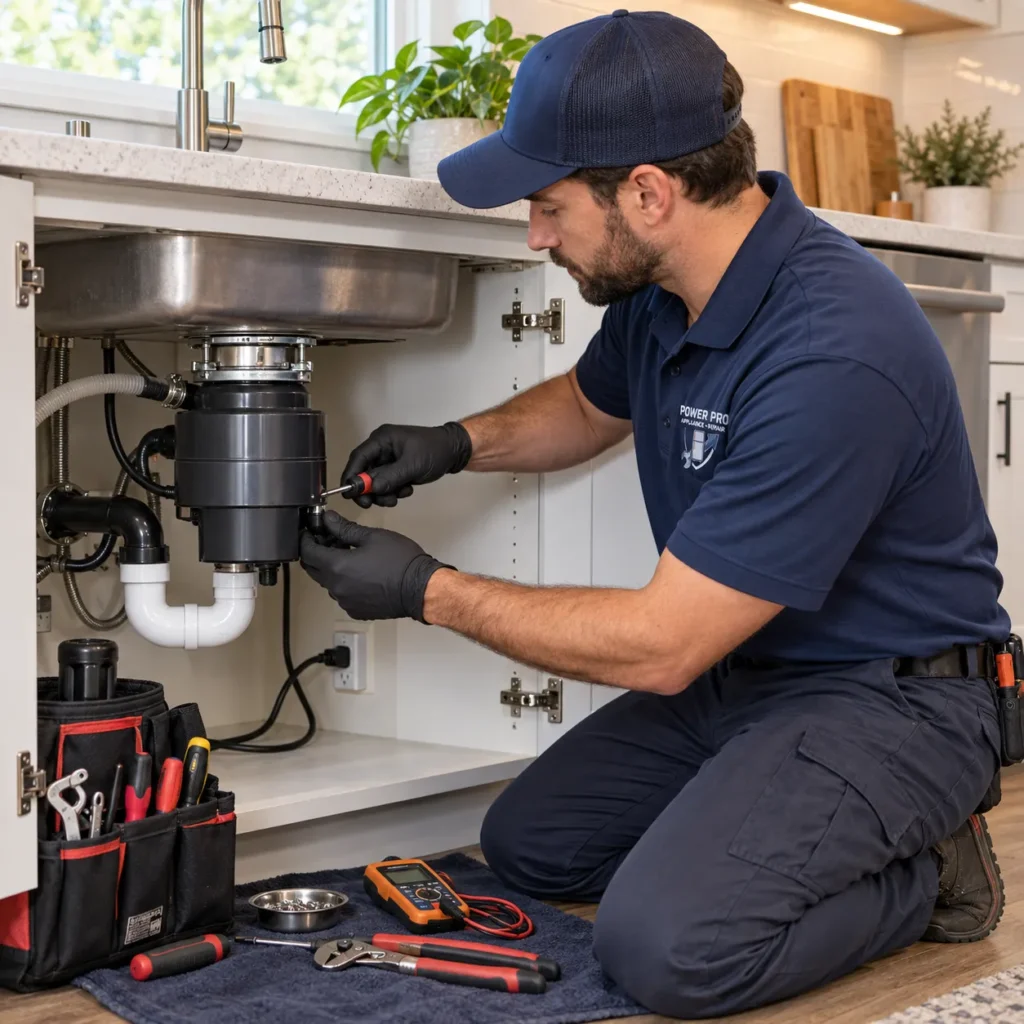
Garbage disposal units function through a direct load-based grinding system where torque, chamber resistance, and discharge flow operate together under continuous pressure. When performance starts shifting, the issue is rarely isolated. It usually begins inside the interaction between motor strength and internal chamber resistance.
In real service cases, the same visible symptom can come from different internal conditions. A unit that still powers on but struggles to break down waste may be dealing with partial blade wear, chamber restriction, or reduced torque transfer under load. In other cases, slow discharge or backup at the sink connection is linked to downstream blockage that changes how material exits the grinding chamber.
Each unit is evaluated based on how it behaves under working load instead of how it responds when idle. This distinction helps separate surface-level obstruction from deeper mechanical wear inside the motor and grinding assembly.
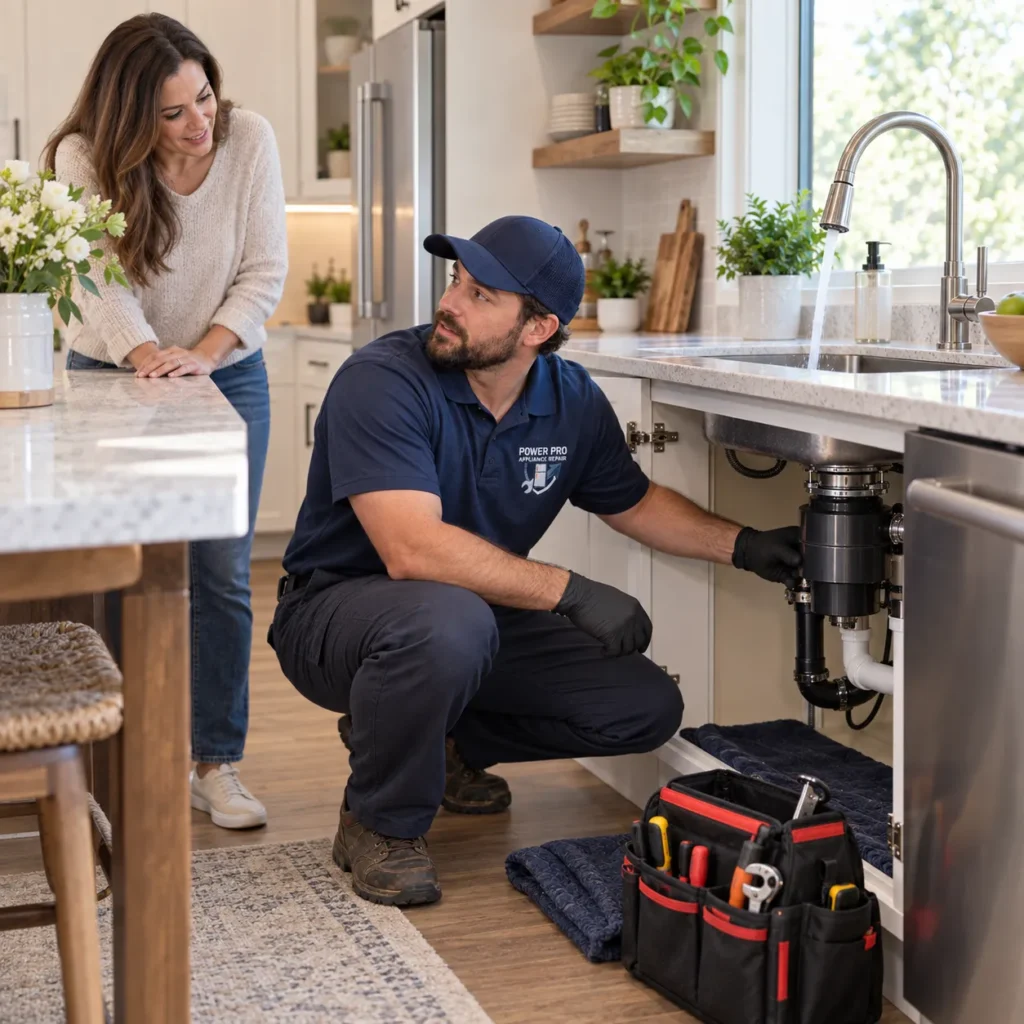
Repair decisions are made after observing how the system performs during active use, not just after inspection. This approach helps homeowners throughout Algonquin, IL receive repairs that address the actual source of the problem instead of only correcting the visible symptom.
Every repair backed by our parts & labor guarantee.
Fast scheduling, often fixed the very same day.
Factory-trained pros for all major brands.
Honest quotes with no hidden fees, ever.
Most garbage disposal repair failures happen because the system is treated as a simple on-off appliance. In practice, it is a load-sensitive mechanical system that reacts differently depending on what is inside the chamber, how often it is used, and how long resistance has been building internally.
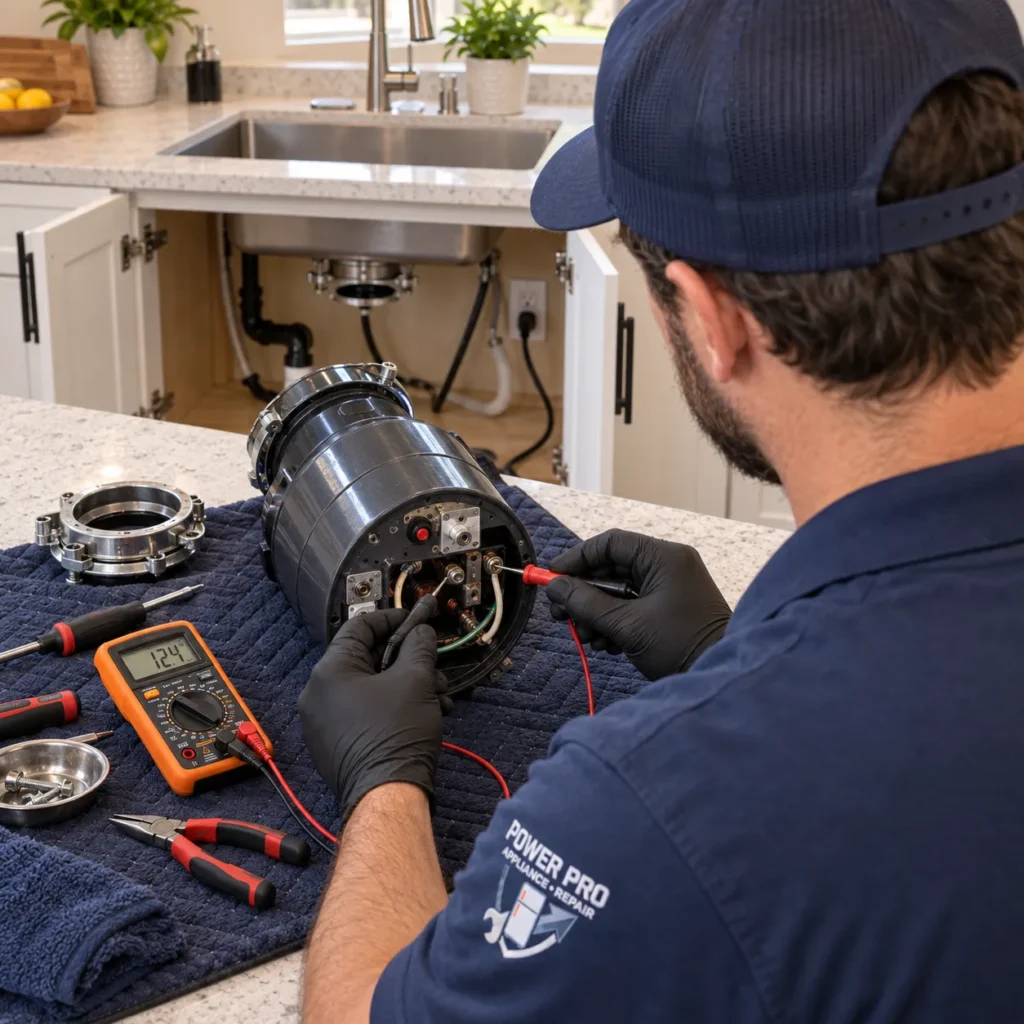
The service approach at Power Pro Appliance Repair is built around load behavior analysis. Instead of assuming a fixed fault, the unit is tested under working conditions to see how it responds when resistance is introduced. This helps identify whether the issue is mechanical blockage, torque weakness, or electrical load instability.
Field experience working in residential kitchens throughout Algonquin shows that disposal problems often repeat after surface-level fixes. A motor may be reset or cleared, but the original resistance pattern inside the chamber remains. This leads to the same breakdown cycle returning after a short period of normal use.
The repair method focuses on identifying the actual stress point inside the system instead of replacing parts based on symptoms. When mechanical resistance is the cause, chamber restoration is prioritized. When torque degradation is present, motor response is evaluated under load before any replacement decision is made.
This reduces repeated failures and restores stable performance under real kitchen conditions rather than temporary idle-state improvement.
A garbage disposal is not just a grinding unit. It is a torque-based motor system connected to a controlled shredding chamber where resistance, rotation speed, and discharge flow must stay balanced. When material enters the chamber, the system depends on continuous torque delivery and unobstructed blade movement to maintain breakdown efficiency.
When performance drops, it is rarely an instant motor failure. The system usually begins to slow down due to partial obstruction, blade wear imbalance, or electrical load inconsistency.
In many cases, the unit still powers on, but grinding efficiency reduces to a point where waste circulation stops properly inside the chamber.
Field observation shows that early-stage issues are often ignored because the unit still runs, even though internal resistance is already increasing.
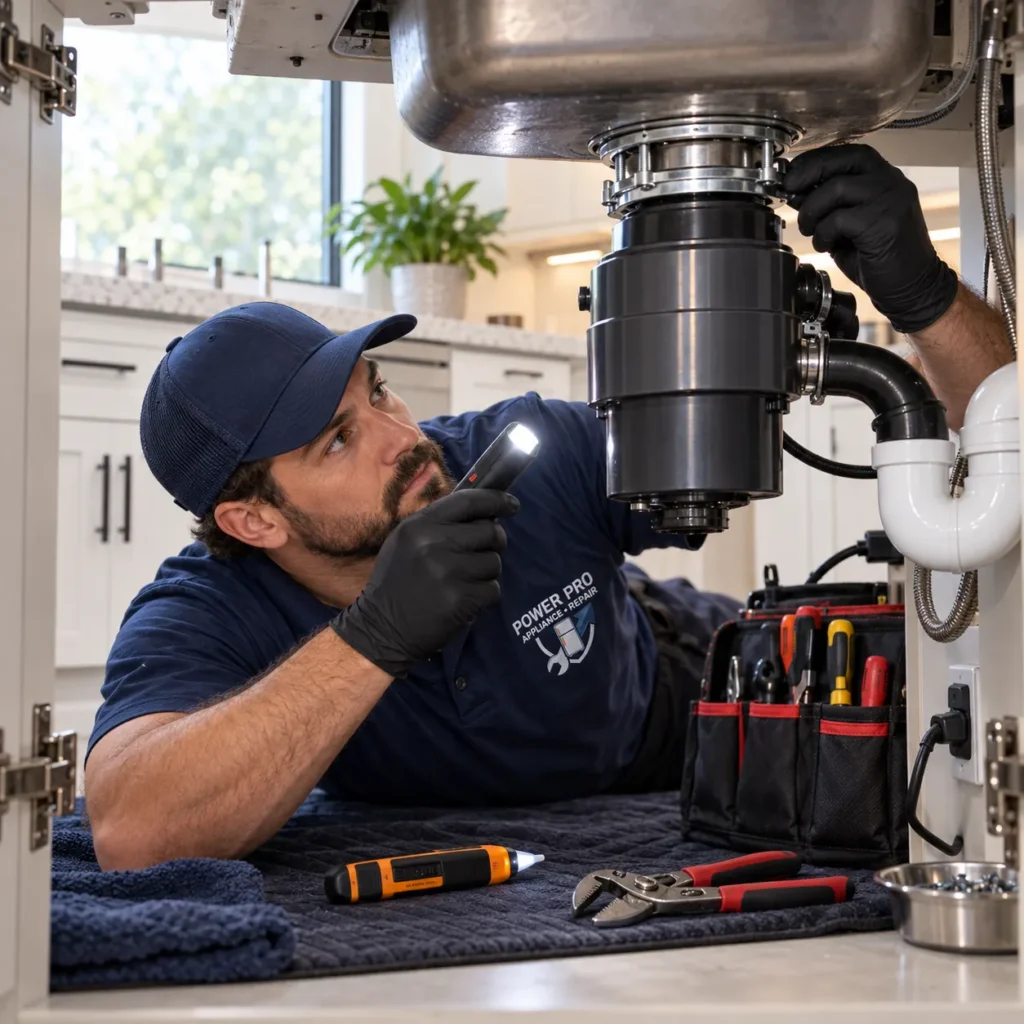
Most garbage disposal failures follow a gradual pattern instead of a sudden breakdown. One common pattern begins with reduced grinding speed.
The motor is active, but food waste remains partially unprocessed. This often indicates early-stage blade dulling or partial chamber restriction.
Another pattern involves a humming sound without rotation.
This condition is typically linked to rotor lock under load, where the motor receives power but cannot overcome mechanical resistance inside the chamber. This is not always a motor defect.
In many cases, internal obstruction or misalignment creates torque blockage. A third pattern is intermittent stoppage during operation.
The unit works in short bursts but shuts off under load. This usually connects to overheating protection activation or electrical load instability inside the motor system. Each pattern reflects a different internal stress point rather than a generic fault.
Repair work begins by identifying whether the failure originates from mechanical resistance, electrical supply inconsistency, or motor load fatigue. These three categories behave differently and require different correction paths.
Mechanical resistance cases are traced through chamber inspection and blade movement analysis. Electrical inconsistencies are evaluated through power flow stability and switch response behavior. Load fatigue cases are identified when the motor struggles under normal input conditions, even without obstruction.
Instead of immediate replacement, the system is tested under controlled load conditions to observe how it reacts at different stress levels. This helps separate temporary blockage from structural wear inside the motor assembly.
In some cases, minor obstruction removal restores full function. In others, repeated overload history indicates internal motor degradation that cannot recover through cleaning alone.
This usually indicates internal resistance buildup or partial chamber obstruction. The motor is active, but torque transfer is not reaching the grinding mechanism effectively.
Humming without rotation typically occurs when the motor receives power but cannot overcome mechanical blockage or internal rotor resistance.
Intermittent shutdown is often linked to overheating protection activation or unstable electrical load response inside the motor system.
Not all cases are repairable. Units with repeated overheating damage or internal motor winding failure often require replacement instead of repair.
Yes. Heavy load cycles, grease accumulation, and insufficient flushing significantly reduce internal chamber efficiency and accelerate wear progression.