Microwave issues rarely begin with complete failure. In most cases, the first sign is inconsistency in heating behavior. Food may warm unevenly, reheating time may increase without a visible change in settings, or results may vary across repeated use. These patterns usually indicate internal changes in energy distribution, magnetron efficiency, or control board response. Across many microwave repair calls in Algonquin, IL, homeowners often notice these gradual performance changes long before the appliance stops heating altogether. Microwave repair is not treated as a simple component replacement process. It is approached as a system behavior evaluation where heating consistency, timing accuracy, and internal energy flow are analyzed before any repair direction is selected. The goal is stable and predictable performance across repeated cycles, not temporary output correction.
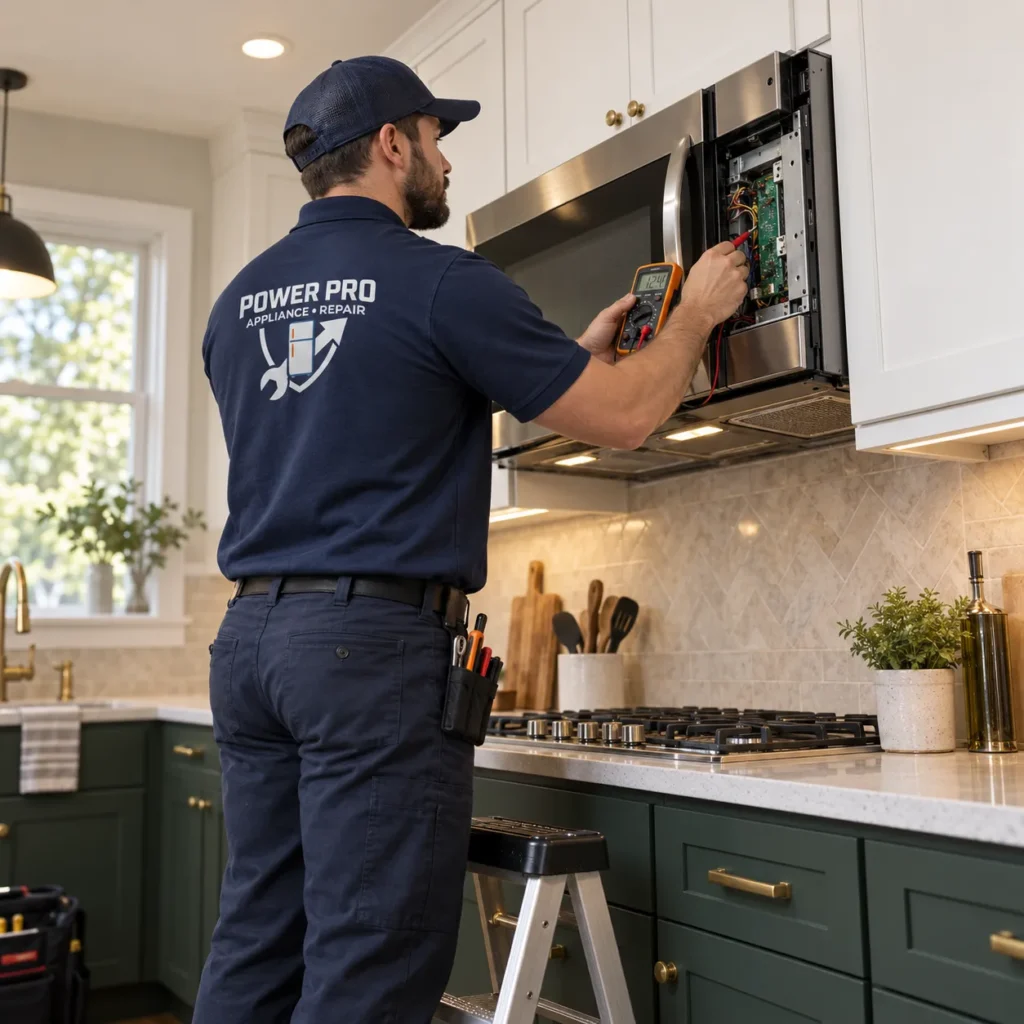
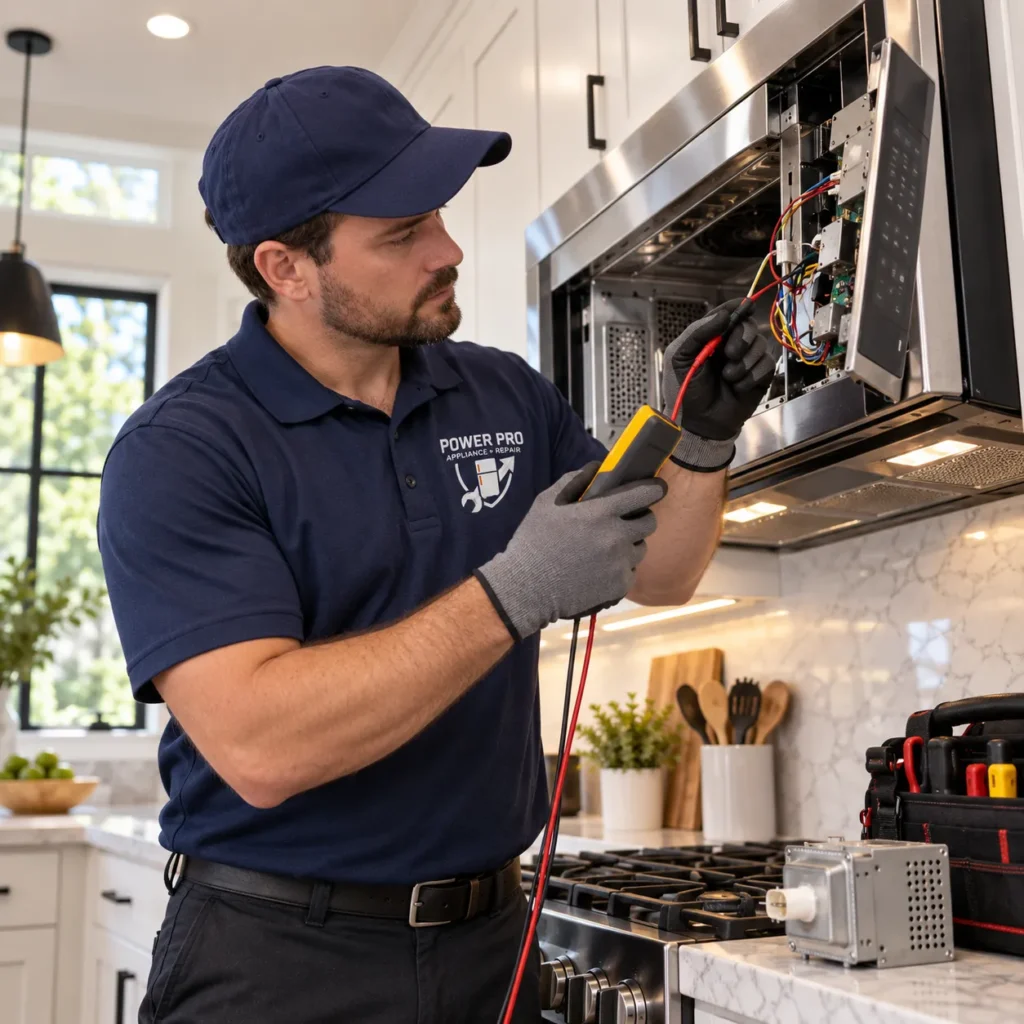
Microwave systems operate through controlled electromagnetic energy conversion. When performance starts to shift, the change is often gradual rather than immediate. A unit may still power on normally but lose consistency in how heat is distributed across different food types and container positions. At Power Pro Appliance Repair, microwave repair is handled through a structured diagnostic review. Each unit is evaluated based on heating uniformity, cycle stability, and response accuracy between input settings and output performance. Common microwave issues include uneven heating, delayed cooking cycles, loss of power consistency, internal sparking, and intermittent shutdown during operation. These conditions are reviewed based on internal system behavior rather than surface symptoms alone.
Every repair backed by our parts & labor guarantee.
Fast scheduling, often fixed the very same day.
Factory-trained pros for all major brands.
Honest quotes with no hidden fees, ever.
Most microwave failures are misdiagnosed when evaluation starts at the wrong layer. Replacing parts without understanding system behavior often leads to repeated faults. The repair method used here follows a behavior-first logic where the appliance is tested across multiple operating conditions before intervention decisions are made.
Heating inconsistency is not treated as a single fault category. It is analyzed through energy output stability, waveform delivery patterns, and load response behavior. This allows identification of whether the issue originates from the magnetron system, diode function, capacitor stability, or control logic variation.
A key observation across real service cases is that similar symptoms can originate from different internal causes. Two microwaves showing identical uneven heating may require completely different repair directions depending on how their internal energy systems respond under load testing.
Repair decisions are made only after confirming how the unit behaves under repeated cycles rather than single test runs. This reduces the recurrence of the same issue after repair and improves long-term stability.
Microwave evaluation begins with performance tracking during controlled heating cycles. The focus is on how energy is distributed across time and load variation. If heating output fluctuates between cycles, the system is reviewed for internal regulation instability rather than surface-level faults.
Control panel response is reviewed for input accuracy. A delay between setting adjustment and heating behavior may indicate signal processing or board communication issues. Power fluctuation during operation is reviewed as a potential indicator of capacitor or transformer inconsistency. Repair execution follows only after identifying the exact point where performance deviation begins. This ensures that intervention is aligned with system behavior rather than isolated symptoms.
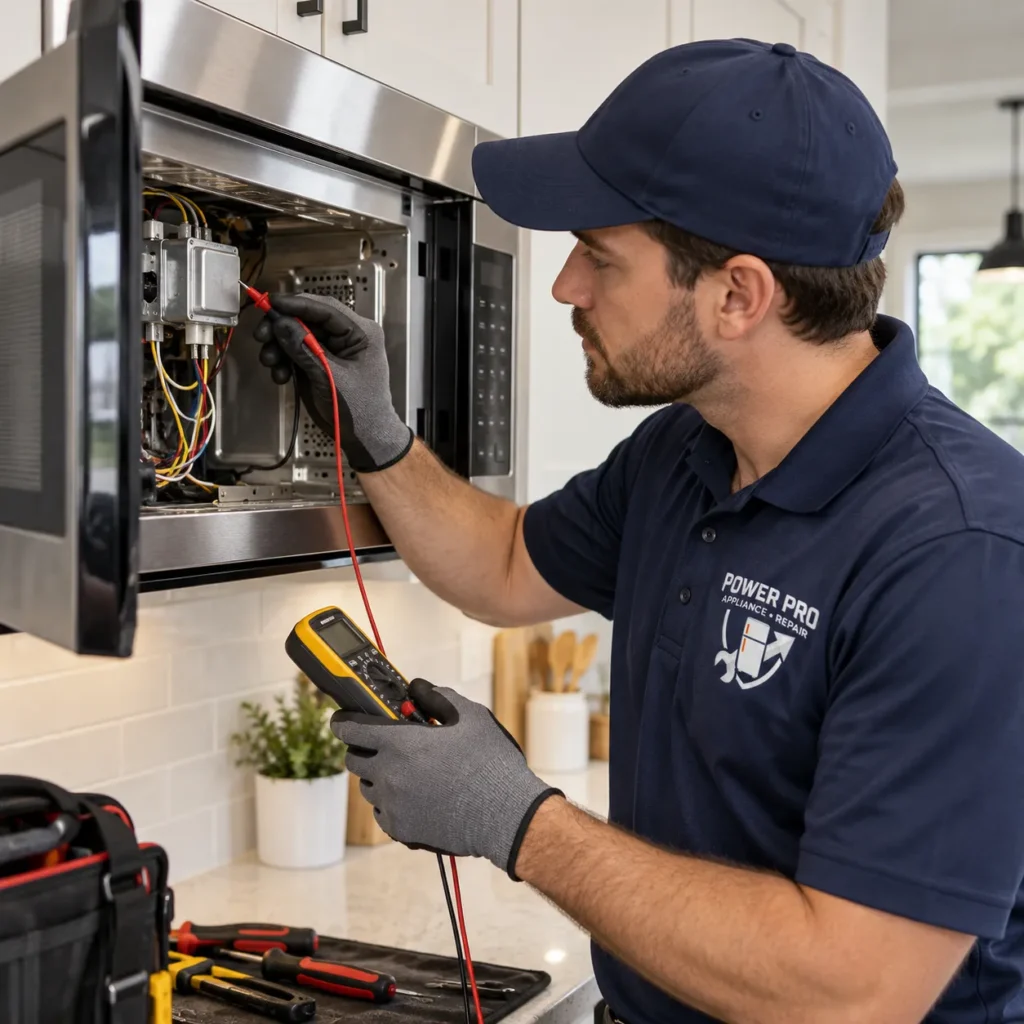
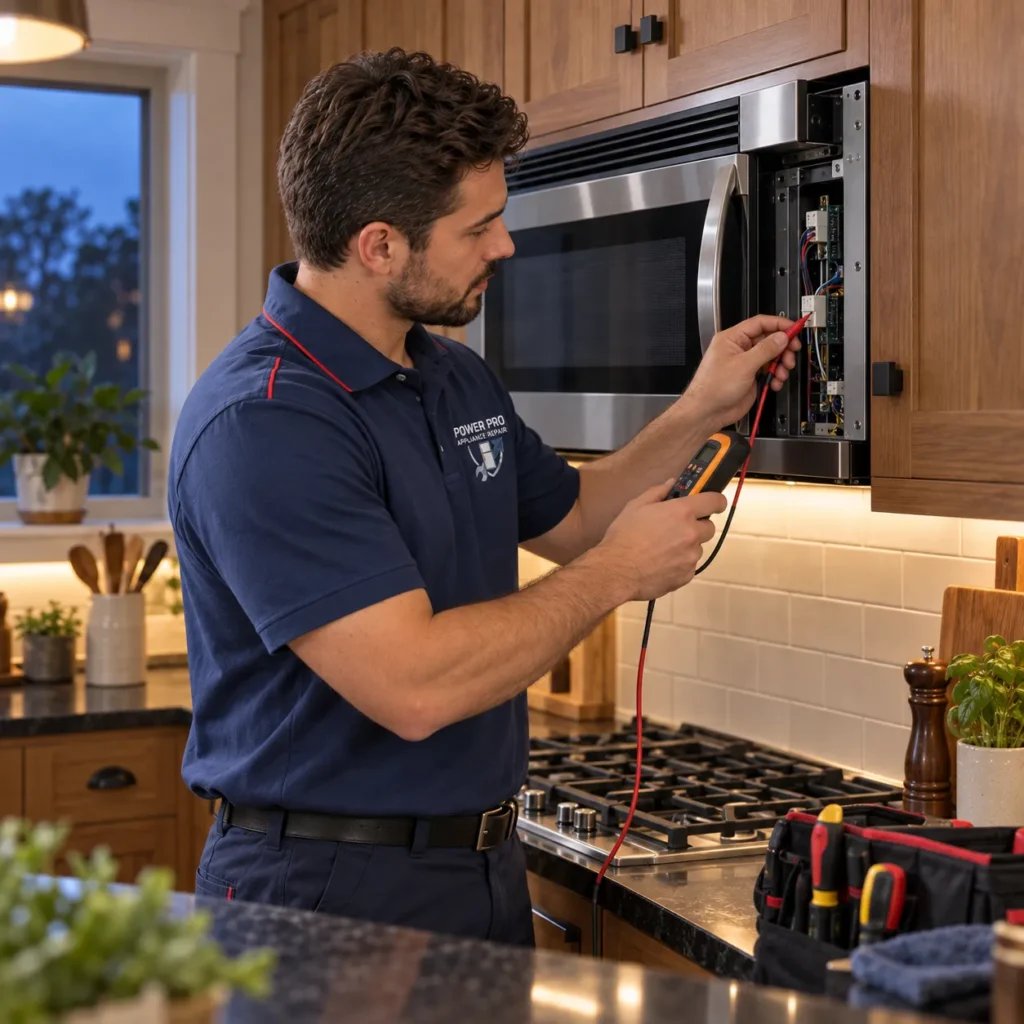
Uneven heating usually occurs when internal energy distribution becomes unstable. This can be related to magnetron wear, wave guide issues, or power delivery inconsistency during cycles.
The appliance may still receive power and operate controls normally, but the heating component may not be generating or delivering energy at the required level for consistent cooking performance.
Yes, in some cases, issues are linked to connection instability or control misalignment rather than full component failure. Diagnosis determines whether repair or replacement is required.
Performance is tested through multiple heating cycles using different load conditions to confirm consistent energy output and stable operation across repeated use.
Early indicators include longer heating time, inconsistent food temperature, unusual noise during operation, and variation in performance across repeated cycles.