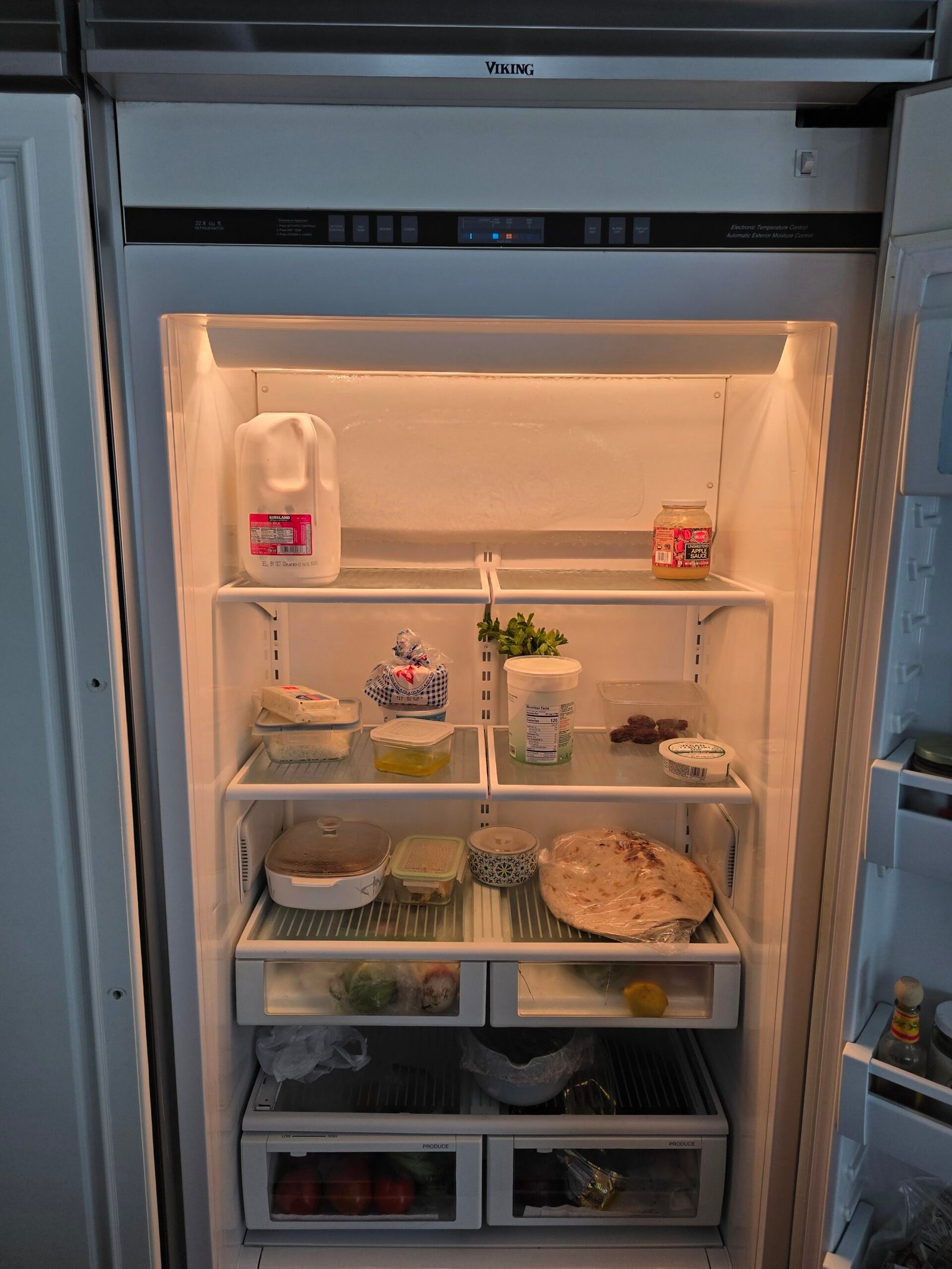
Refrigerator and freezer problems usually start at a point where everything still appears functional, but storage conditions begin to shift without clear warning. Items inside may not last as long as before, frozen goods may lose uniform texture, and some areas inside the same unit may behave differently even under identical settings. These changes indicate that the cooling flow inside the system is no longer moving in a balanced way, even though the appliance continues to run.
Refrigeration systems work through a continuous cycle where cooling is created, distributed, and maintained across multiple internal zones. When any part of this cycle loses balance, performance does not collapse immediately. Instead, cooling becomes uneven in ways that are often subtle at first but become noticeable through storage inconsistency.
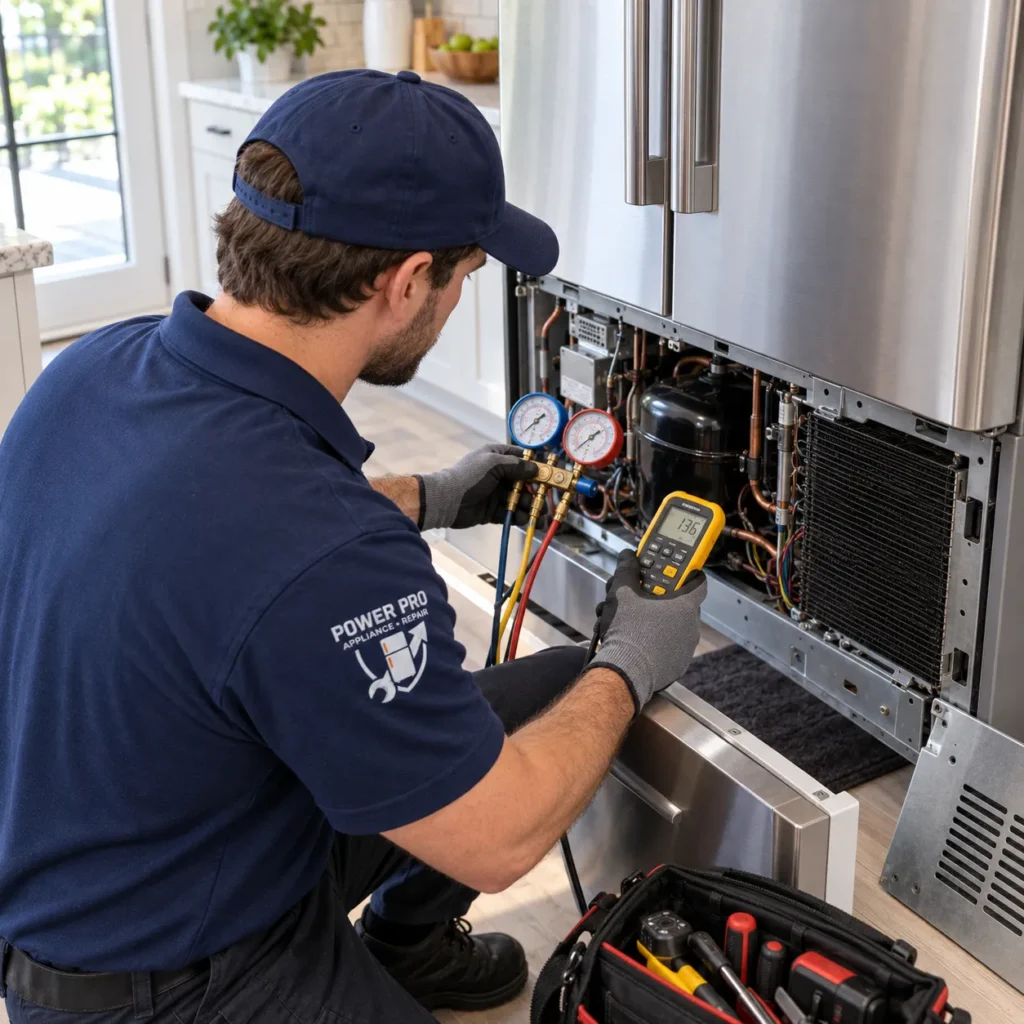
At Power Pro Appliance Repair, refrigerator and freezer repair is handled through a structured evaluation of cooling behavior across compartments rather than a single point inspection. Each unit is reviewed based on how it performs from startup to steady operation, how it responds after repeated door openings, and how it handles changes in internal load, such as food placement and storage density.
Every repair backed by our parts & labor guarantee.
Fast scheduling, often fixed the very same day.
Factory-trained pros for all major brands.
Honest quotes with no hidden fees, ever.
Cooling issues are not always about loss of temperature. In many cases, the system still produces cold air but fails to distribute it evenly. This creates a situation where some sections remain properly cooled while others drift outside the optimal storage range without obvious external signs.
One common pattern is uneven shelf behavior, where items placed in different zones experience different cooling conditions. Another pattern appears as delayed stabilization after door openings, where the system takes longer than normal to return to consistent temperature levels.
Over time, these small delays affect overall storage reliability. Freezer performance changes often appear through inconsistency in ice formation.
Instead of uniform freezing, items may develop mixed texture layers or uneven hardness, which signals that cooling retention is not stable across the entire compartment.
These patterns are not treated as solo symptoms. They are read as signs of cooling flow imbalance inside the system.
Diagnosis begins by observing how cooling behaves over time rather than checking a single temperature point. The system is evaluated from the moment it starts cooling through its stabilization phase and into repeated usage cycles where doors are opened and closed under normal conditions.
A stable system maintains predictable cooling recovery after each disturbance. When instability is present, recovery time changes unpredictably, and cooling strength varies between cycles even when no settings are adjusted.
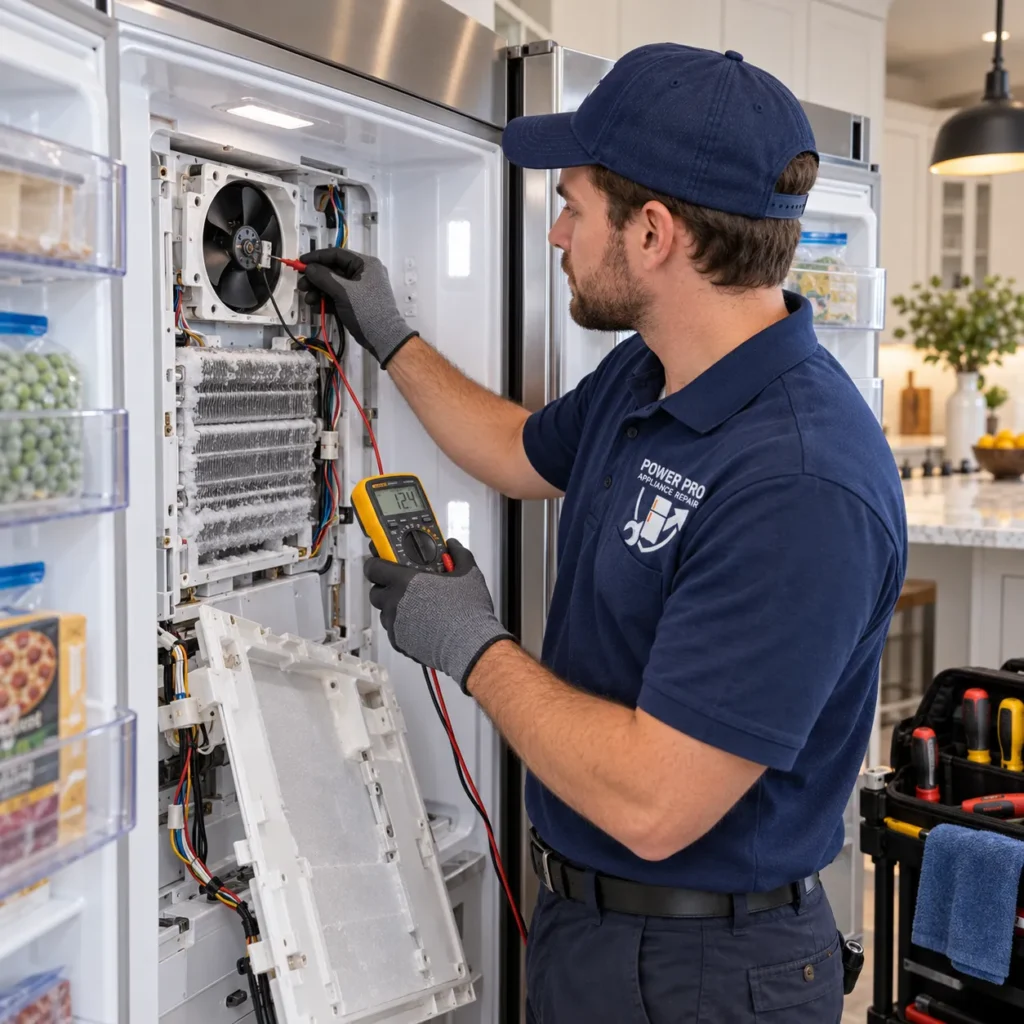
Airflow movement is also reviewed as part of the diagnostic structure because cooling depends on how air circulates inside compartments. When airflow becomes restricted or uneven, temperature layers form inside the refrigerator, where some zones remain colder than others without a clear indication from controls or sensors. Freezer evaluation follows a retention-focused pattern where the system must hold temperature consistency under repeated load changes. Any drift in stability during this phase indicates a deeper imbalance in cooling regulation.
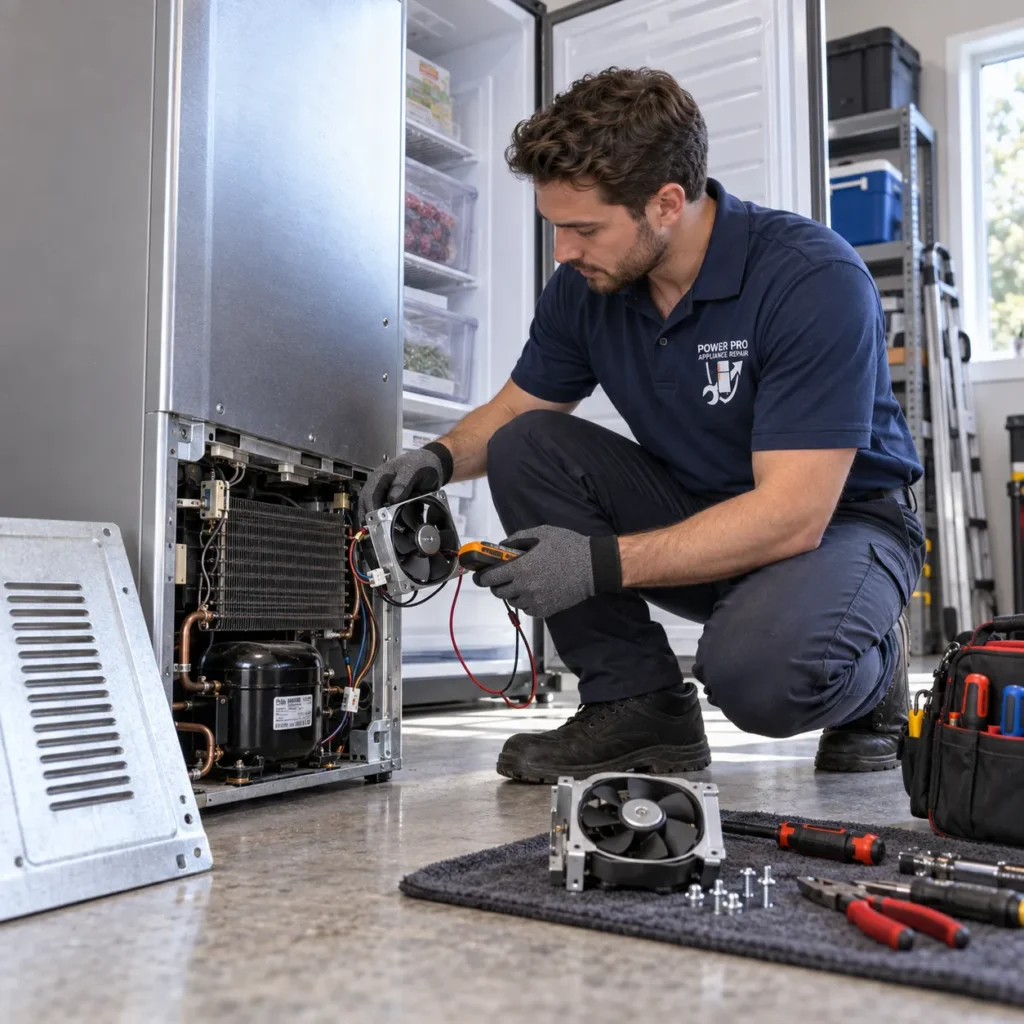
Repair direction is not decided by symptoms alone but by identifying where cooling behavior first begins to break. Some systems lose balance at the generation stage, where cooling strength itself becomes inconsistent. Others maintain generation but fail at distribution, leading to uneven internal conditions. In some cases, cooling is generated and distributed but not retained, causing instability after repeated use. Each layer requires a different correction approach. Addressing the wrong layer leads to temporary improvement followed by the return of the same issue. Repair is therefore aligned with the exact point of failure inside the cooling cycle rather than visible surface effects. After correction, the system is tested across repeated cooling cycles with varying internal load to confirm whether stability holds under real usage conditions rather than controlled conditions alone.
Cooling performance is also influenced by how the appliance is used and the environment it operates in. Frequent door openings increase recovery demand and expose weaknesses in cooling stability.
Overloading reduces airflow movement and creates uneven temperature zones inside the compartments. Placement near external heat sources increases system stress and can gradually reduce efficiency even if the unit continues to function normally.
Electrical consistency also plays a role in long-term cooling stability. Fluctuations in supply can affect compressor behavior and create variations in cooling cycles that are not immediately visible but affect storage performance over time. These factors are considered during evaluation when internal system behavior does not fully explain the cooling variation observed.
This usually happens when cooling is not evenly distributed across all compartments. Some zones may not maintain stable storage conditions even though the system appears operational.
Uneven freezing is often linked to instability in cooling flow or retention behavior, which leads to inconsistent temperature conditions across different areas of the freezer.
This indicates that the system is struggling to restore a stable temperature quickly after an internal disturbance, which points toward reduced cooling efficiency or airflow imbalance.
In many cases, yes, because issues often come from airflow restriction, cycle imbalance, or calibration drift rather than full system failure.
The earliest sign is usually inconsistency in storage behavior across different zones rather than a complete loss of cooling.